Our Entomology Dept.

____________________________________________________________________________________________________________________________

WEST NILE VIRUS
Loren Cambell, Biology Assistant
September 8, 2026
Recently, Walton County has issued a health advisory for West Nile Virus.
When it comes to mosquitoes that can spread West Nile Virus, Culex nigripalpus and Culex quinquefasciatus play a big role in the spread of disease.
Cx. nigripalpus and Cx. quinquefasciatus are medium sized brown mosquitoes that are active during dawn, dusk and after dark. Both mosquitoes look similar, but if you look closely Cx. quinquefasciatus has stripes you can also see from above.

If mosquitoes had a real estate agent, Cx. quinquefasciatus would probably say, “I'll take anything with water.” These mosquitoes aren't particularly picky about where they lay their eggs. They can use everything from dirty buckets and stagnant water containing trash to roadside ditches. Basically, if water sits around long enough, Cx. quinquefasciatus may see it as a nursery. Cx. nigripalpus can be found in many places like grassy water, sitting water on forest floors that are covered with pine needles, ditches and upturned boats.
During the drier winter months, adult Cx. nigripalpus move into the tree canopy, where conditions are warmer and more humid. Up there, they primarily feed on birds.
When spring and summer arrive, however, Cx. nigripalpus moves lower and becomes less picky, feeding on a variety of vertebrates like birds and mammals.

Cx. nigripalpus and Cx. quinquefasciatus are vectors of West Nile Virus. West Nile is a mosquito transmitted virus that birds and mammals can contract. Mosquitoes can bite birds with West Nile, pick up the virus from their blood, then bite other birds, therefore passing it to them. Cx. quinquefasciatus has both bird and mammal blood meals so under the right conditions, it can pick up West Nile Virus from an infected bird and potentially transmit it to a human or other mammal. Once a mammal gets the Virus a mosquito cannot pick it back up and spread it to others.
The good news is that you don't need a mosquito control truck or a superhero cape to make a difference. One of the easiest things you can do is eliminate places where mosquitoes can lay their eggs.
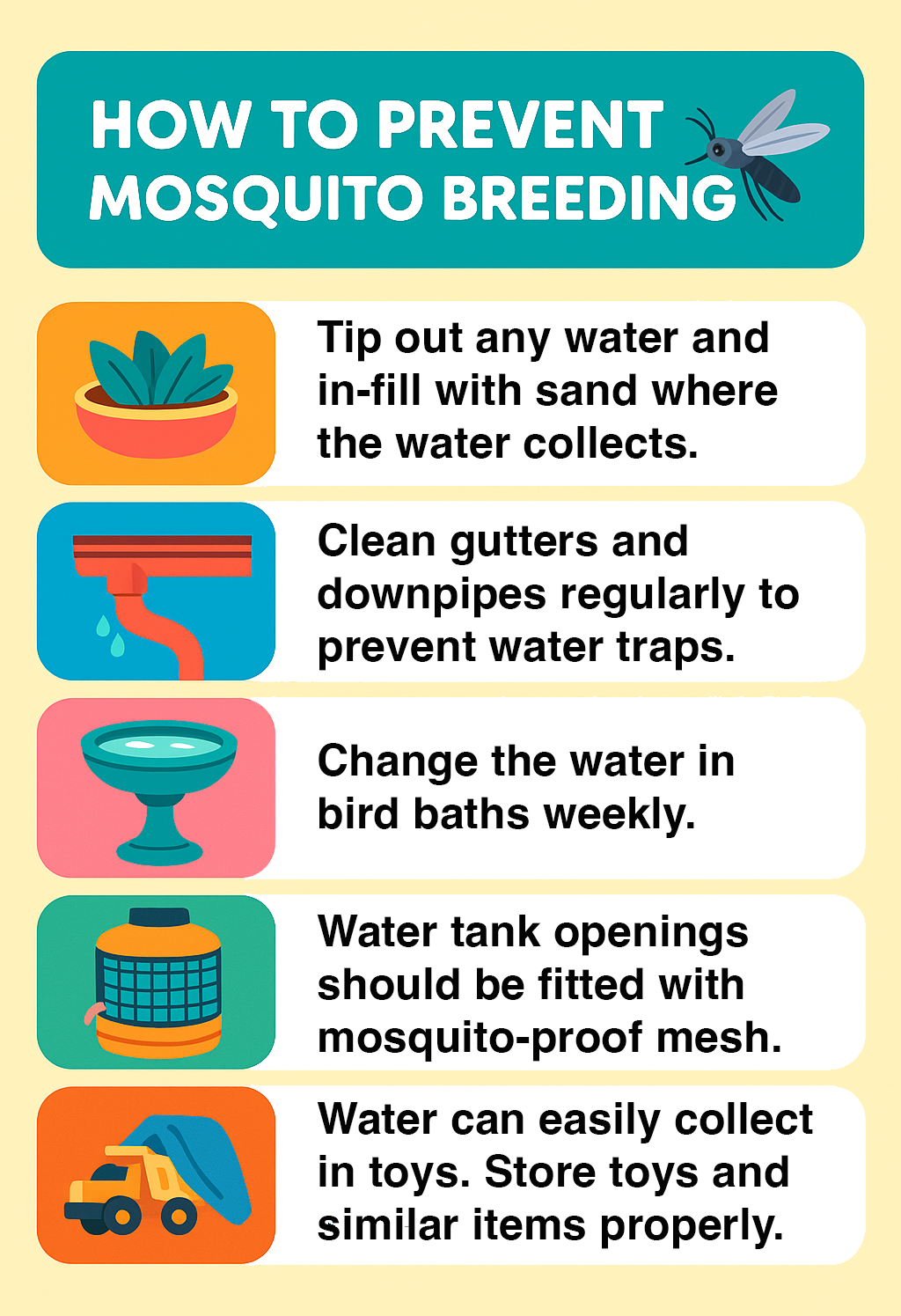
Take a walk around your yard and look for anything that can hold standing water:
- Buckets
- Flowerpots and plant saucers
- Children's toys
- Tarps
- Tents
- Totes and storage containers
- Kayaks and canoes
- Clogged gutters
If something is holding water, dump it out. If you can't dump it, position it so water runs off instead of collecting. For example, lean a storage tote against a wall or flip kayaks and canoes upside down when they're stored outside. If an object can collect more than a teaspoon of water, find a way to tilt, cover, empty, or remove it. A few minutes of yard cleanup can remove potential mosquito habitat, reduce mosquito numbers around your home, and help lower the risk of West Nile Virus. When it comes to mosquito control, small actions can make a big difference.
References
Day, J. F. (1997). The Florida SLE Mosquito, Culex (Culex) nigripalpus Theobald (Insecta: Diptera:
Culicidae). EDIS, 1997. https://doi.org/10.32473/edis-in136-1997
Jacksonville.Gov - culex Nigripalpus. (2026a). Retrieved September 3, 2026, from Jacksonville.gov website: https://www.jacksonville.gov/departments/neighborhoods/mosquito-control/culex-nigripalpus
Culex quinquefasciatus. (2023). Retrieved September 3, 2026, from Coachella Valley Mosquito and Vector Control District website: https://www.cvmosquito.org/culex-quinquefasciatus
CDC. (2024, May 17). West Nile: Causes and how it spreads. Retrieved September 3, 2026, from West Nile Virus website: https://www.cdc.gov/west-nile-virus/causes/index.html
_________________________________________________________________________________________________________________
High Salinity Predators
Loren Cambell, Biology Assistant
July 1, 2026
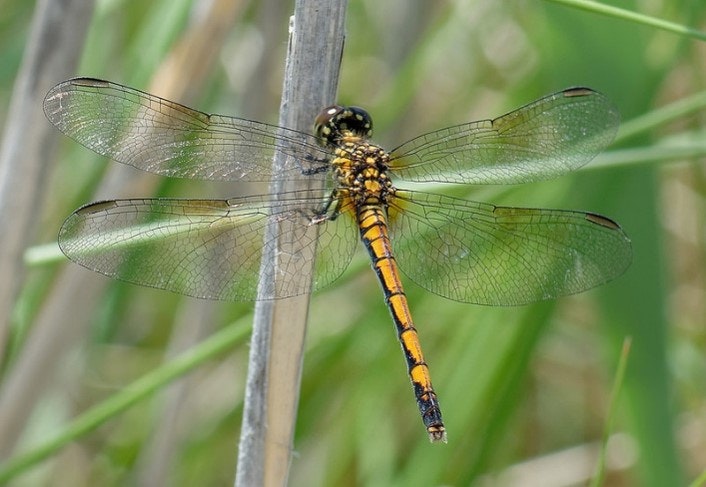
South Walton County has a diverse selection of aquatic habitats, one of the main habitats that make this area special are the Salt Marshes. Salt marshes are characterized by their high salinity waters that house many unique organisms, including North America’s only saltwater dragonfly. While most dragonflies prefer freshwater ponds and lakes, the Seaside Dragonlet has carved out its own salty niche in the marsh. The Seaside Dragonlet (Erythrodiplax Berenice) is a dragonfly that almost exclusively lives in salt marshes. Its range stretches along the Atlantic and Gulf coasts, from Canada all the way to Mexico. Dragonflies, like mosquitoes, have an aquatic immature stage. However, unlike mosquitoes, Dragonflies go through incomplete metamorphosis (meaning they do not have a larval stage, they go from egg to nymph/naiad to adult). Dragonfly nymphs are fierce predators feeding on many other aquatic macroinvertebrates. Nymphs have a hinged lower jaw called a labial mask that can shoot forward in a split second to grab unsuspecting prey, pulling it towards their mouth. If you've ever seen the creature from the movie Alien launch its inner jaws, you've got a pretty good idea of what a dragonfly nymph looks like at feeding time!
Check out this video of a dragonfly nymph feeding: https://www.pbs.org/video/a-baby-dragonflys-mouth-will-give-you-nightmares-drr85d/.

Dragonfly nymphs are natural predators that keep the mosquito population down before the adults emerge and start taking blood meals. In South Walton County's salt marshes, the two common mosquito species are the black salt marsh mosquito (Aedes taeniorhynchus) and the eastern salt marsh mosquito (Aedes sollicitans). The Seaside Dragonlet shares these marshes with them and is one of their natural predators. So, the next time you walk through a salt marsh, remember that beneath the water's surface, a miniature battle is taking place. Tiny dragonfly nymphs are patrolling the marsh like underwater superheroes, helping control mosquitoes and keeping this unique ecosystem in balance.
FUN FACT: Seaside Dragonlets are known for being extremely lazy adults. In a study, it was found they spend most of their time perched instead of flying.
See also Gulf South Vector Newsletter.
References Sited
About Seaside Dragonlet - Maryland Biodiversity Project. (2018). Retrieved June 24, 2026, from Maryland Biodiversity Project website: https://www.marylandbiodiversity.com/species/721
Wilson, W. H. (2008). The Behavior of the Seaside Dragonlet, Erythrodiplax berenice (Odonata: Libellulidae), in a Maine Salt Marsh. Northeastern Naturalist, 15(3), 465–468. https://doi.org/10.1656/1092-6194-15.3.465