Mosquito Prevention & Protection
It Takes a Community to Fight Mosquitoes
Mosquitoes don’t recognize property lines. They can easily travel from yard to yard throughout South Walton County, increasing the risk of nuisance and disease. That’s why controlling standing water on your property is only part of the solution.
We all play a role. Help protect your community by encouraging friends, neighbors, and coworkers to eliminate standing water wherever it’s found. When we work together, we can make a real impact.
Eliminate Mosquito Breeding Sources
Reduce mosquito populations by removing standing water around your home:
- Dump and drain containers holding water at least once a week
- Clean and scrub bird baths and pet water bowls weekly
- Empty water from potted plant saucers
- Avoid transporting or sharing plant cuttings rooted in water
- Drill holes in containers to prevent water from collecting
- Use our Mosquito Source Checklist for a thorough inspection
- Explore our DIY solutions for additional tips

WHAT I NEED TO KNOW? CLICK HERE
Prevent Mosquito Bites
Protect yourself and your family:
- Apply EPA-approved insect repellent (such as those containing DEET) to exposed skin
- Keep doors and windows closed or properly screened; repair any damage
- Wear long sleeves, long pants, and light-colored clothing when outdoors
Want to Do More? Get Involved
Take an active role in protecting your neighborhood:
- Submit a Service Request for a free mosquito inspection
- Become a neighborhood advocate
- Conduct regular checks around your home and property
- Use approved DIY mosquito control methods when appropriate
- Request mosquito fish for eligible water sources
The Dept. of Health continues to advise the public to remain diligent in their personal mosquito protection efforts. These should include remembering “Drain and Cover”.

Drain and Cover
DRAIN standing water to stop mosquitoes from multiplying
- Drain water from garbage cans, house gutters, buckets, pool covers, coolers, toys, flower pots or any other containers where sprinkler or rain water has collected.
- Discard old tires, drums, bottles, cans, pots and pans, broken appliances and other items that aren’t being used.
- Empty and clean birdbaths and pet’s water bowls at least once or twice a week.
- Protect boats and vehicles from rain with tarps that don’t accumulate water.
- Maintain swimming pools in good condition and appropriately chlorinated. Empty plastic swimming pools when not in use.
COVER skin with clothing or repellent
- CLOTHING – Wear shoes, socks, and long pants and long-sleeves. This type of protection may be necessary for people who must work in areas where mosquitoes are present.
- REPELLENT – Apply mosquito repellent to bare skin and clothing.
- Always use repellents according to the label. Repellents with DEET(N,N-diethylm-toluamide), picaridin, oil of lemon eucalyptus, and IR3535 are effective.
- Use mosquito netting to protect children younger than 2 months old.
- Use the EPA’s search tool (click here) to find the right repellent for you and your family members.
COVER doors and windows with screens to keep mosquitoes out of your house
- Repair broken screening on windows, doors, porches, and patios.
Tips on Repellent Use
- Always read label directions carefully for the approved usage before you apply a repellent. Some repellents are not suitable for children.
- Products with concentrations of up to 30 percent DEET are generally recommended. Other US Environmental Protection Agency-approved repellents contain Picaridin, oil of lemon eucalyptus, or IR3535. These products are generally available at local pharmacies. Look for active ingredients to be listed on the product label.
- Apply insect repellent to exposed skin, or onto clothing, but not under clothing.
- In protecting children, read label instructions to be sure the repellent is ageappropriate. According to the CDC, mosquito repellents containing oil of lemon eucalyptus should not be used on children under the age of three years. DEET is not recommended on children younger than two months old.
- Avoid applying repellents to the hands of children. Adults should apply repellent first to their own hands and then transfer it to the child’s skin and clothing.
- If additional protection is necessary, apply a permethrin repellent directly to your clothing. Again, always follow the manufacturer’s directions.
Preventing Mosquito-Borne Diseases
Preventing mosquito bites is the best way to reduce the risk of mosquito-borne disease. Mosquitoes can be found in many different environments and you may not always notice when you have been bitten. Mosquito activity in Florida can be year round. The following are some steps that can be taken to help prevent mosquito bites.
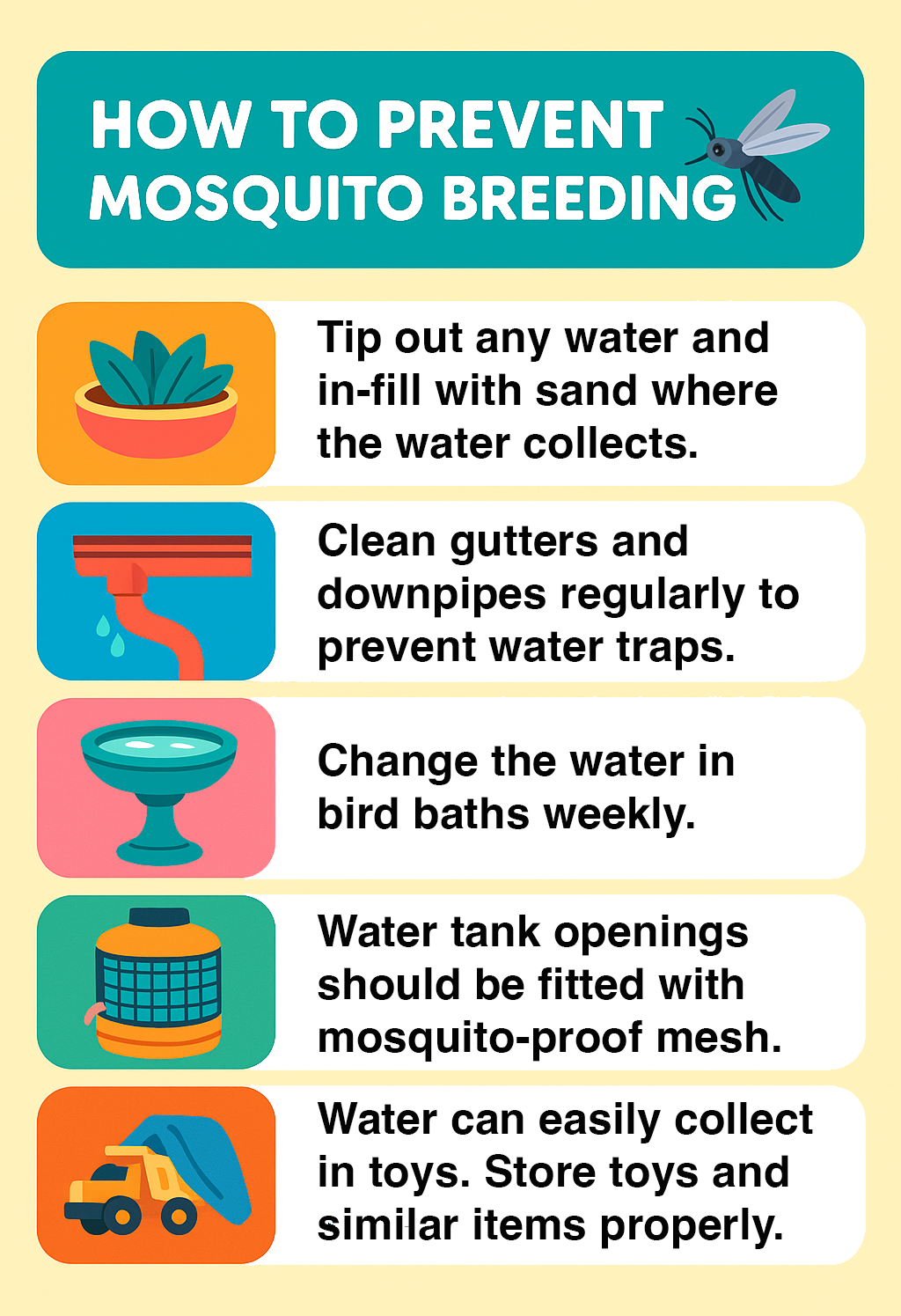
DRAIN: water from garbage cans, house gutters, pool covers, coolers, toys, flower pots or any other containers where sprinkler or rain water has collected.
DISCARD: Old tires, drums, bottles, cans, pots and pans, broken appliances and other items that aren’t being used.
EMPTY and CLEAN: Birdbaths and pet’s water bowls at least once or twice a week.
PROTECT: Boats and vehicles from rain with tarps that don’t accumulate water.
CLOTHING: If you must be outside when mosquitoes are active, cover up. Wear shoes, socks, long pants, and long sleeves.
MAINTAIN: The water balance (pool chemistry) of swimming pools. Empty plastic swimming pools when not in use. Repair broken screens on windows, doors, porches, and patios.
REPELLENT: Apply mosquito repellent to bare skin and clothing. Always use repellents according to the label. Repellents with DEET, picaridin, oil of lemon eucalyptus, methyl nonyl ketone, and IR3535 are effective. Use mosquito netting to protect children younger than 2 months.
More questions? Visit The UF/IFAS Center for Public Issues Education in Agriculture and Natural Resources (PIE Center.
Prevention and Control Measures
The most effective way to avoid West Nile virus disease is to prevent mosquito bites. Be aware of the West Nile virus activity in your area and take action to protect yourself and your family.
Avoid Mosquito Bites
- Use insect repellents when you go outdoors. Repellents containing DEET, picaridin, IR3535, and some oil of lemon eucalyptus and para-menthane-diol products provide longer-lasting protection. To optimize safety and effectiveness, repellents should be used according to the label instructions.
- When weather permits, wear long sleeves, long pants, and socks when outdoors. Mosquitoes may bite through thin clothing, so spraying clothes with repellent containing permethrin or another EPA-registered repellent will give extra protection. Don’t apply repellents containing permethrin directly to skin. Do not spray repellent on the skin under your clothing.
- Take extra care during peak mosquito biting hours. Take extra care to use repellent and protective clothing from dusk to dawn or consider avoiding outdoor activities during these times.

Mosquito-Proof Your Home
- Install or repair screens on windows and doors to keep mosquitoes outside. Use your air conditioning.
- Help reduce the number of mosquitoes around your home by emptying standing water from flowerpots, gutters, buckets, pool covers, pet water dishes, discarded tires, and birdbaths on a regular basis.
Help Your Community West Nile Virus Surveillance and Control Programs
- Support your local community mosquito control programs. Mosquito control activities are most often handled at the local level, such as through county or city government. The type of mosquito control methods used by a program depends on the time of year, the type of mosquitoes to be controlled, and the habitat structure. Methods can include elimination of mosquito larval habitats, application of insecticides to kill mosquito larvae, or spraying insecticides from trucks or aircraft to kill adult mosquitoes. Your local mosquito control program can provide information about the type of products being used in your area. Check with your local health department for more information. Contact information may be found in the blue (government) pages of the phone book.
- Report dead birds to local authorities. Dead birds may be a sign that West Nile virus is circulating between birds and the mosquitoes in an area. By reporting dead birds to state and local health departments, you can play an important role in monitoring West Nile virus. State and local agencies have different policies for collecting and testing birds, so check with your state health department to find information about reporting dead birds in your area.
Click these links for more information:
