
St. Louis Encephalitis
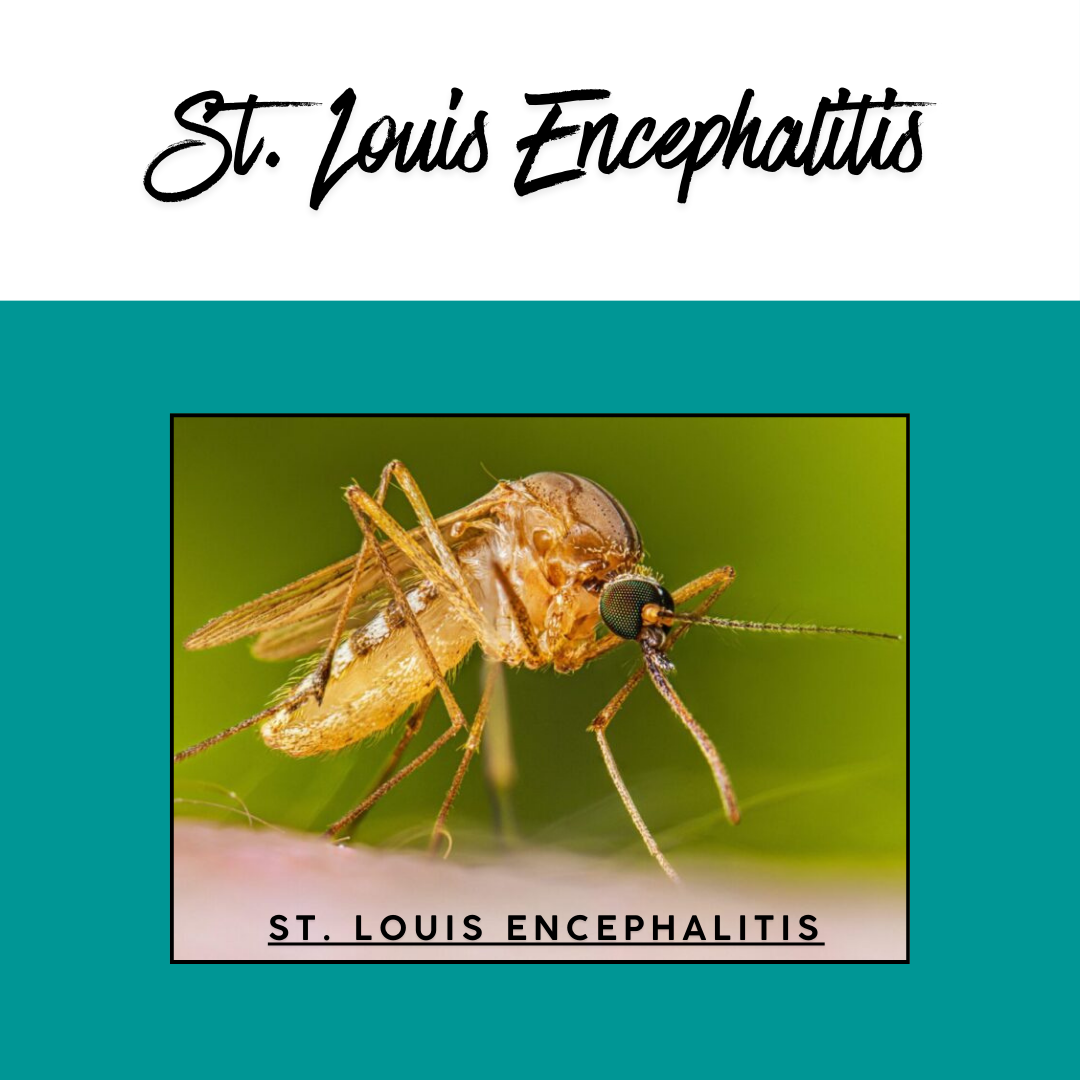
St. Louis encephalitis (SLE) virus is a mosquito-borne flavivirus that is maintained in a cycle between Culex mosquitoes and birds.
Prior to the introduction of West Nile in 1999, SLE was the most common mosquito-transmitted pathogen in the U.S.
Since the introduction of West Nile virus, St. Louis encephalitis activity has decreased dramatically. Research has suggested that West Nile virus infection may provide some immunity to SLE in birds.
TRANSMISSION: St. Louis encephalitis virus is spread to people by the bite of an infected mosquito.
SYMPTOMS: Most people infected with St. Louis encephalitis virus do not have symptoms. Those people who do become ill may experience fever, headache, nausea, vomiting, and tiredness. Some people may develop neuroinvasive disease, such as encephalitis (inflammation of the brain) or meningitis (inflammation of the membranes that surround the brain and spinal cord). In rare cases, long-term disability or death can occur.
TREATMENT: There is currently no therapeutic treatment for SLE. Current methods consist primarily of symptom treatment and supportive care.
FOR MORE INFO, visit St. Louis Encephalitis - Florida Department of Health.